The Bible often uses powerful images from nature to communicate spiritual truths, and locusts are one of the most striking examples.
From divine warnings to calls for repentance and promises of restoration, locusts in the Bible remind us that God’s Word is trustworthy and purposeful.
As you explore these Scriptures, allow your heart to reflect, grow, and place deeper trust in God’s plans—even in seasons of loss or hardship.
Bible Verses About Locusts in the Bible and Their Meaning
Joel 1:4 (NIV)
“What the locust swarm has left the great locusts have eaten; what the great locusts have left the young locusts have eaten.”
This verse shows total devastation, reminding us how unchecked sin or disobedience can slowly consume every area of life. It encourages believers to examine their hearts early and return to God before spiritual loss multiplies.
This verse can inspire positive change by urging personal accountability and repentance, helping believers protect their faith and spiritual growth.
Joel 2:25 (NIV)
“I will repay you for the years the locusts have eaten…”
God’s promise of restoration brings hope to anyone who feels they’ve lost time, peace, or purpose. No matter how severe the damage, God can restore what feels permanently broken.
This verse encourages trust in God’s healing power and reminds believers that no season of loss is beyond redemption.
Exodus 10:14 (NIV)
“They covered all the ground until it was black. They devoured all that was left…”
The plague of locusts in Egypt demonstrates God’s authority over nations and nature. It reveals the consequences of hardened hearts and persistent rebellion.
This verse invites self-reflection, reminding believers to remain humble and responsive to God’s guidance rather than resisting His will.
Deuteronomy 28:38 (NIV)
“You will sow much seed in the field but you will harvest little, because locusts will devour it.”
Here, locusts symbolize the results of disobedience—effort without reward. It highlights the importance of aligning actions with God’s commands.
This verse encourages believers to seek God’s wisdom so their labor produces lasting fruit and fulfillment.
Amos 4:9 (NIV)
“I sent blight and mildew… yet you have not returned to me.”
God uses hardship to draw people back to Himself, not to destroy them. This verse shows His desire for repentance and restored relationship.
It can impact life positively by encouraging believers to recognize God’s loving correction and respond with obedience.
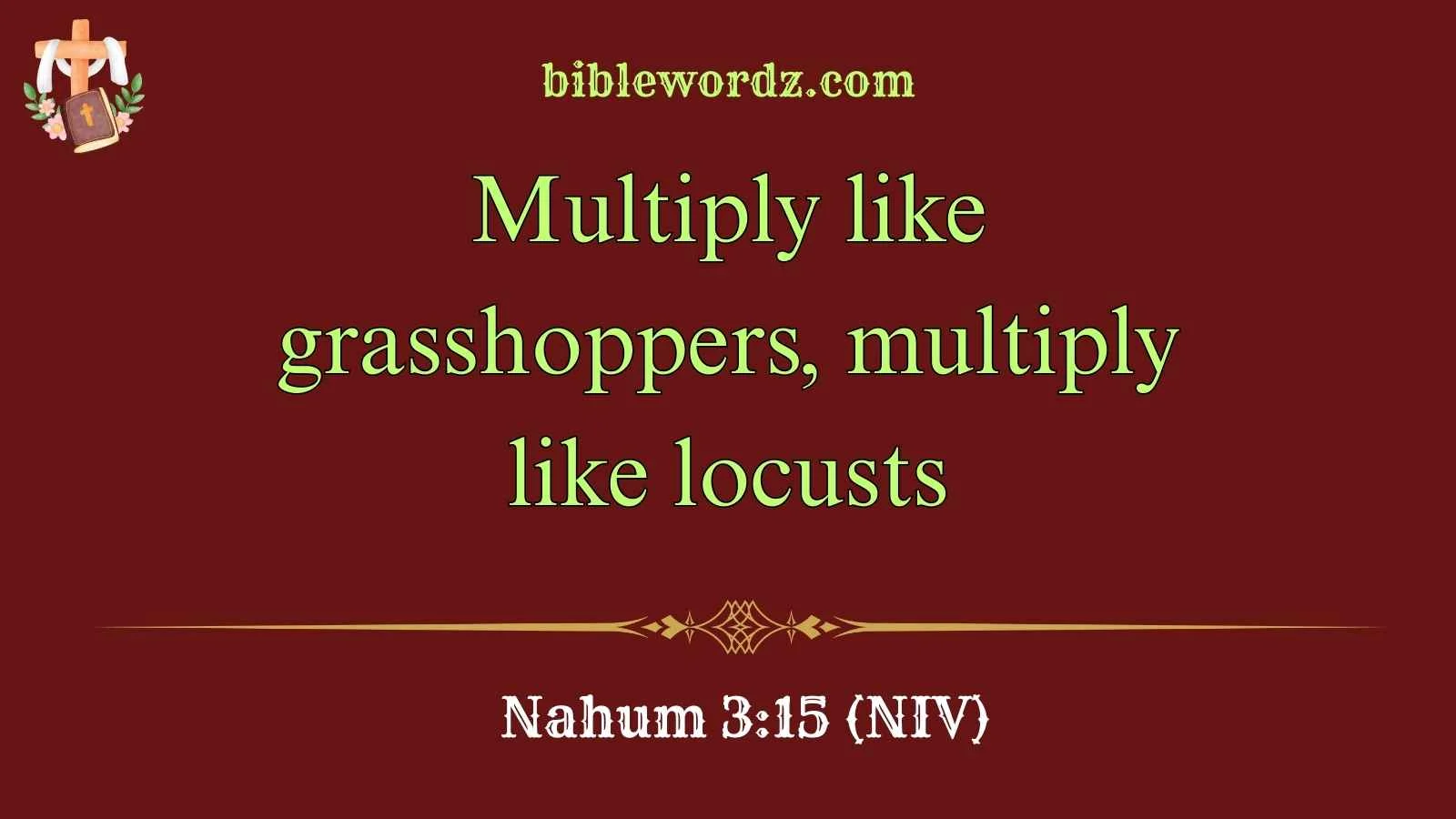
Nahum 3:15 (NIV)
“Multiply like grasshoppers, multiply like locusts!”
Locusts here represent temporary power and fleeting strength. What seems mighty without God will not endure.
This verse reminds believers to place their confidence in God rather than earthly success or numbers.
Proverbs 30:27 (NIV)
“Locusts have no king, yet they advance together in ranks.”
This verse highlights unity and purpose. Even without leadership, locusts move in harmony—teaching a lesson about cooperation.
It encourages believers to walk in unity within the body of Christ, working together for God’s glory.
Revelation 9:3 (NIV)
“And out of the smoke locusts came down on the earth…”
These symbolic locusts represent judgment during the end times, emphasizing God’s ultimate justice.
This verse encourages believers to stay spiritually prepared and grounded in faith, knowing God’s justice is righteous and sure.
Judges 6:5 (NIV)
“They invaded the land… like swarms of locusts.”
Locusts symbolize oppression and repeated defeat when Israel turned away from God.
This verse inspires believers to seek God’s protection and strength rather than relying on their own power.
Psalm 105:34–35 (NIV)
“He spoke, and the locusts came… they ate up every green thing.”
God’s spoken word brings action. This verse highlights His sovereignty over creation.
It encourages trust in God’s authority and confidence that His Word always fulfills its purpose.
FAQs
What do locusts symbolize in the Bible?
Locusts often symbolize judgment, destruction, and warnings from God, but they also point to repentance and restoration.
Are locusts always a sign of punishment?
Not always. While they often represent judgment, they can also be tools God uses to call people back to Him.
What is the spiritual meaning of locusts?
Spiritually, locusts can represent loss, spiritual emptiness, or consequences of sin—but also the opportunity for renewal.
How does Joel’s prophecy about locusts apply today?
It reminds believers that God can restore broken seasons when people turn back to Him sincerely.
Can locust verses encourage hope?
Yes. Many passages, especially Joel 2:25, emphasize God’s promise to restore and renew what was lost.
Conclusion:
The message of locusts in the Bible is not just about destruction—it is about God’s mercy, correction, and restoration.
Through these verses, believers are reminded that even in the most difficult seasons, God remains faithful.
Let these Scriptures encourage reflection, repentance, and renewed trust in His Word. Share this message to inspire others who may be walking through their own season of loss, knowing that God restores all things in His perfect time.