
In the fast-paced world of texting and social media, abbreviations and acronyms are everywhere. One of the increasingly common terms you might encounter is “hu”. But what does it actually mean? People often stumble upon “hu” in chats, comments, or social media posts and wonder if it’s a typo, a slang term, or something deeper.
Understanding this abbreviation can make online conversations smoother and help avoid confusion.
In this guide, we’ll dive into the meaning, origin, and usage of “hu” across platforms and contexts, along with practical tips on how to respond when someone sends it in a message.
Whether you’re texting friends, interacting on dating apps, or browsing social media, this article will clear up all your doubts.
Meaning & Definition
The abbreviation “hu” is primarily used as a shorthand for “huh” or “who”, depending on the context.
- Primary Meaning:
- “Huh” – expressing surprise, confusion, or seeking clarification.
Example: “You’re moving to Canada?” → “Hu?”
- “Huh” – expressing surprise, confusion, or seeking clarification.
- Secondary Meaning:
- “Who” – used in casual texts or social media to ask about a person.
Example: “Hu is at the party tonight?”
- “Who” – used in casual texts or social media to ask about a person.
It’s a simple, versatile term that relies heavily on context to convey the correct meaning.
Quick Bullet Examples:
- “Hu said that? 😳” → asking who said something
- “You finished your homework?” → “Hu… I forgot 😅” → expressing confusion
- “Hu wants pizza?” → casual question about people
Background & Origin
The term “hu” is derived from informal shorthand in texting culture. Its origin traces back to early SMS and instant messaging, where typing quickly led people to drop extra letters.
- “Huh” abbreviation: People shortened “huh” to “hu” to save time.
- Casual language trend: The rise of social media platforms encouraged ultra-short, easy-to-type responses.
- Global usage: While “hu” is most common in English-speaking chats, similar shorthand exists in other languages too, reflecting universal texting trends.
Usage in Different Contexts

“Hu” is highly context-dependent and can appear in various communication forms:
- Chat & Messaging Apps: Quick responses to questions or surprising news.
- Social Media Comments: Reacting to unexpected posts or tagging someone.
- Professional Fields (rare): Mostly avoided, but could appear in casual team chats to prompt clarification.
Example Chat Scenarios:
- Friend: “I just got promoted!” → You: “Hu? That’s amazing!”
- Colleague: “The meeting is postponed.” → You: “Hu… I just blocked my schedule.”
Meanings Across Platforms
Different platforms slightly influence how “hu” is interpreted:
- WhatsApp: Casual and conversational; mostly shorthand for “huh.”
- Instagram: Often appears in comments or DMs to ask “who” or express confusion.
- TikTok: Commenters use it to react quickly to surprising videos.
- Snapchat: Short replies in streak chats, used like “huh” or “who.”
Other Fields
Outside texting, “HU” can have technical or professional meanings:
- Physics: HU stands for Hounsfield Unit, used in CT scans.
- Medical: Abbreviation in hospital charts (e.g., hemoglobin units).
- Aircraft: HU could appear in model codes or airport abbreviations.
Common Misconceptions & Mistakes
Many users mistake “hu” for:
- A typo of “hi”
- A name abbreviation
- A meaningless placeholder
Tip: Context is key. Check the surrounding message before reacting.
Similar Terms & Alternatives of hu
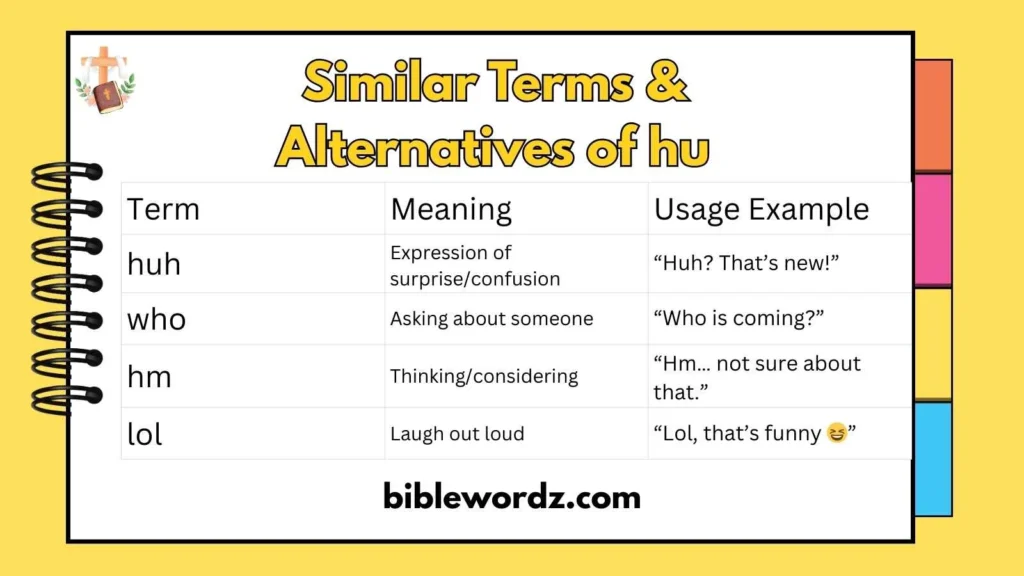
| Term | Meaning | Usage Example |
|---|---|---|
| huh | Expression of surprise/confusion | “Huh? That’s new!” |
| who | Asking about someone | “Who is coming?” |
| hm | Thinking/considering | “Hm… not sure about that.” |
| lol | Laugh out loud | “Lol, that’s funny 😆” |
How to Respond to It
Here are practical ways to reply to “hu” in chat:
- Clarification: “Could you explain? 🤔”
- Playful: “Hu indeed! 😂”
- Direct Answer: “I said I’ll be late 😅”
- Friendly Inquiry: “Hu sent this message?”
Differences From Similar Words
- Huh vs Hu: “Huh” is more formal and widely recognized; “hu” is casual, informal, and mostly digital.
- Who vs Hu: “Who” asks for a person, “hu” can be both shorthand for “who” or an expression of confusion.
Relevance in Online Conversations & Dating Apps
- Used to express curiosity or surprise without being intrusive.
- Helps maintain casual, light-hearted conversations.
- Common in dating apps where users prefer short, fast responses.
Popularity & Trends Over Time
- Google Trends: Searches for “hu meaning in text” spike during increased social media activity.
- Social Usage: Particularly common among teens and young adults in messaging apps and comment sections.
FAQs
1. What does hu mean in texting?
It’s shorthand for “huh” or “who,” depending on context.
2. Is hu rude?
Not usually; it’s casual and neutral. Tone matters.
3. Can hu be used professionally?
Rarely. Stick to full words in professional emails.
4. Is hu the same as huh?
Mostly yes, but “hu” is shorter and more informal.
5. How do I respond to hu in chat?
Clarify, answer directly, or use a playful reply depending on context.
Conclusion
In a world dominated by fast messaging and social media, “hu” has emerged as a simple, versatile shorthand for expressing confusion, surprise, or asking “who.” Understanding its meaning and usage can make online conversations smoother and more fun.
From casual texts to social media comments, knowing how to respond appropriately ensures clarity and engagement.
By keeping context in mind and recognizing the subtle differences between similar terms, anyone can master this small but significant piece of modern digital communication. Next time someone sends “hu,” you’ll know exactly how to reply—and even make it a little fun!